As I mentioned in my last post, I love telling traditional tales in my kindergarten classroom. Students are immediately drawn in because THEY become part of the storytelling experience. Last week, I introduced the story of The Three Pigs. When I read a traditional tale, I always remind students that these stories have been told…
As I mentioned in my last post, I love telling traditional tales in my kindergarten classroom. Students are immediately drawn in because THEY become part of the storytelling experience. Last week, I introduced the story of The Three Pigs. When I read a traditional tale, I always remind students that these stories have been told over and over again. That is what makes them perfect to tell orally. it is also the reason why there are so many different versions of folktales.
I started the week with Paul Galdone’s classic telling of The Three Little Pigs and my own oral retelling using felt board pieces.

Throughout the story, the students used their big voices to help me “huff and puff” as the wolf and their tiny voices to mention the hair on their “chinny chin chins” as the pigs.
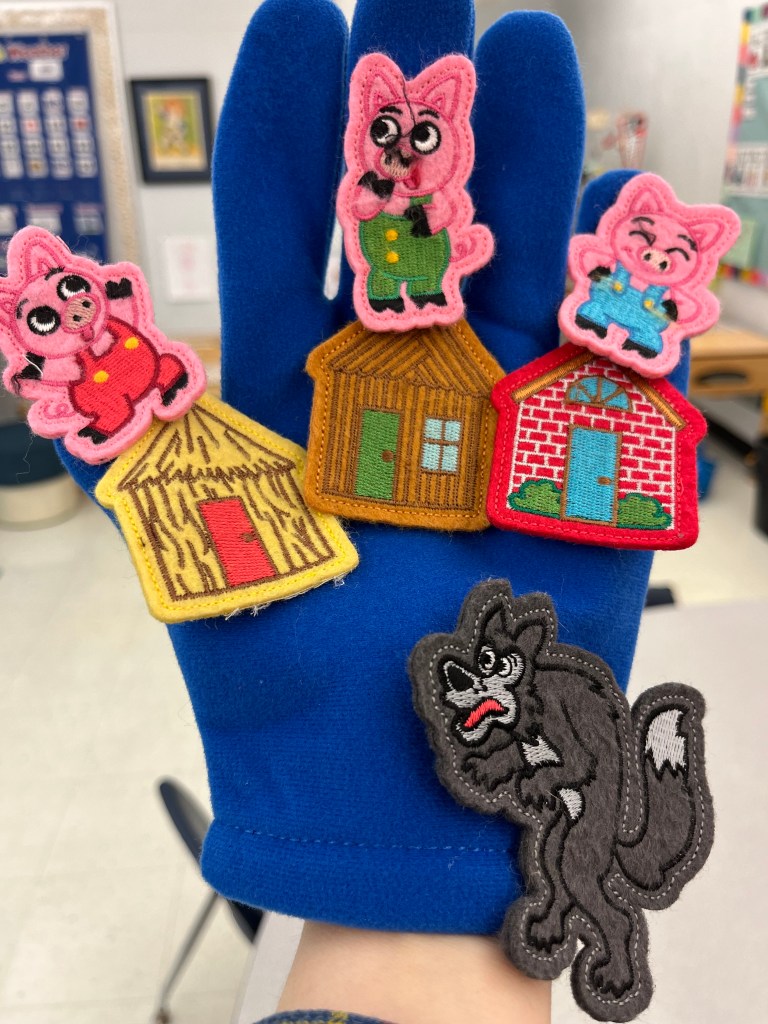
This is a video I made in my covid virtual teaching days for my preschool class.
As the story came to an end, a student’s hand shot up as she exclaimed that she had another version of this tale at home. She was bursting with excitement as she told me it was called The Three Little Wolves and the Big Bad Pig (Eugene Trivizas), and the wolves have power tools. Naturally, I was bursting with excitement as well. I had never heard of this version, and I was curious about the power tools. So, I did what any good kindergarten teacher would do: I invited her to bring it to school the next day.
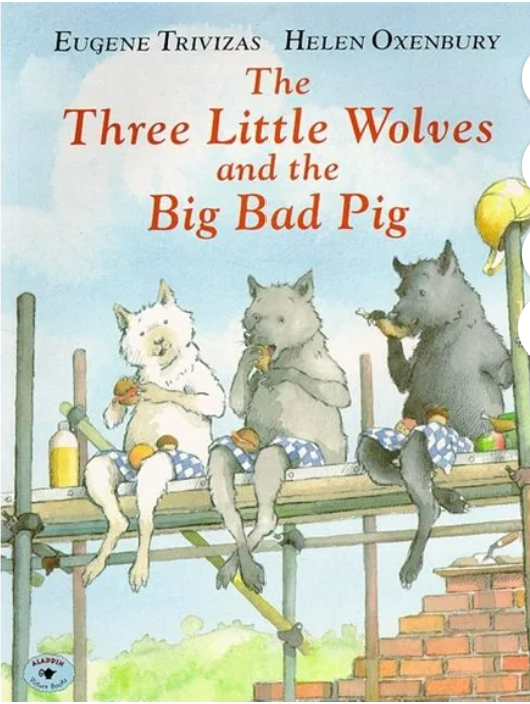
The next day, as the book arrived, the kindergarteners could not wait until we cracked it open. I have to admit, it was exciting for me to read a new children’s book myself. The room was quiet, and the anticipation was palpable as we turned pages, made predictions, awed with excitement as each power tool increased in size, and let the story unfold. At some point, I heard a few kids hush another because they were so invested in this book. I don’t want to spoil the ending for you, but I do want to say it was one of the best read-aloud experiences I have had in a long time of teaching. As soon as I finished, a boy raised his hand to say that he had a different version of the story at his home too. And so the next day, we read The True Story of the 3 Little Pigs by Jon Scieszka.
A few days later, I was meeting with parents for parent-teacher conferences. I mentioned to the girl’s parents that I had never seen The Three Little Wolves and the Big Bad Pig and that it was so exciting to read with the kids. Her dad’s eyes lit up as he told me how excited she was to share the book with the class. There is so much to love about the shared storytelling experience.
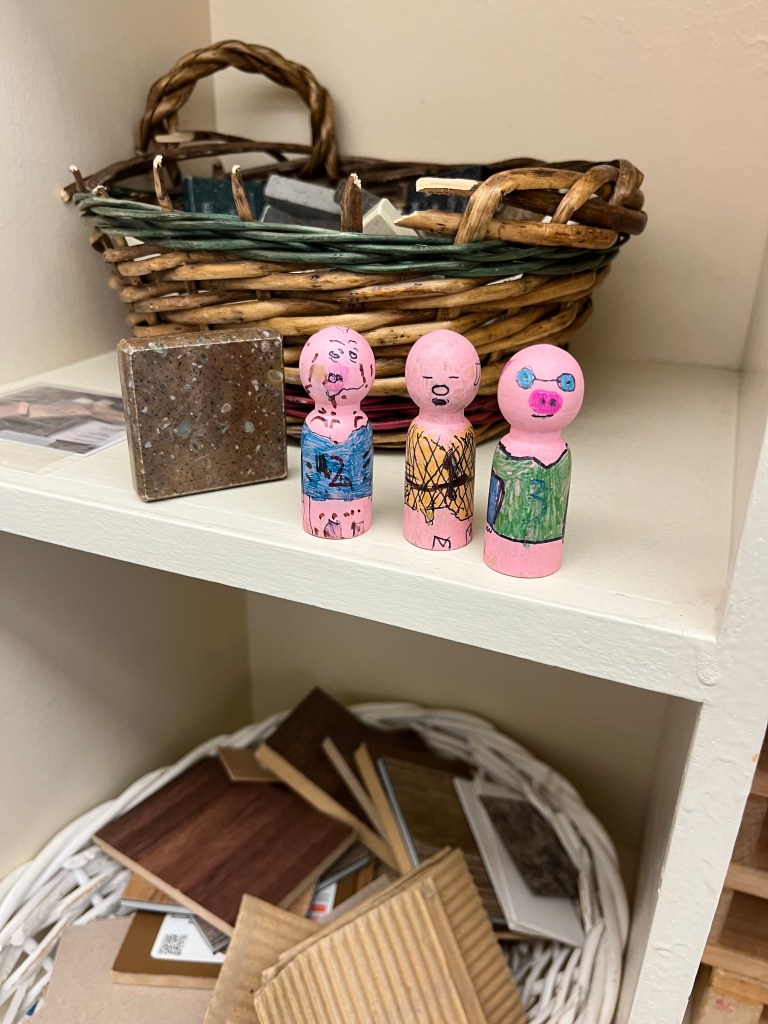
Also, adding these peg doll pigs my son painted for me in the building area with a range of different building materials turned out to be hit. Houses were built and blown down as students worked together to retell the story. I love hearing the students use new vocabulary and story structure from the original tale, all while creating their own versions of the story together. The story of The Three Little Wolves and the Big Bad Pig perfectly demonstrated how a story can be changed to create a new story.
 Mrs. Coomber's Kinderland
Leave a comment