During the winter break, I joked with my nephews that the number one rule in my classroom is No Chanting. A few minutes later, I realized that I break that rule every day when I draw my students’ attention to counting how many days of school we have had.
In my first few years of teaching kindergarten, I used different-colored Post-it notes to create a 100-square on my bulletin board. Each day, I added one more number to represent each day we have been in school. When we got to the 100th day, we celebrated our 100th day of learning. (Counting to 100 by ones and tens is one of the Common Core Math Standards for Kindergarten, so it is the perfect day to celebrate.) In my opinion, it is one of the best days of kindergarten. We only have 17 more days until we hit the 100th day this year. The kids cannot wait to see how we will celebrate.
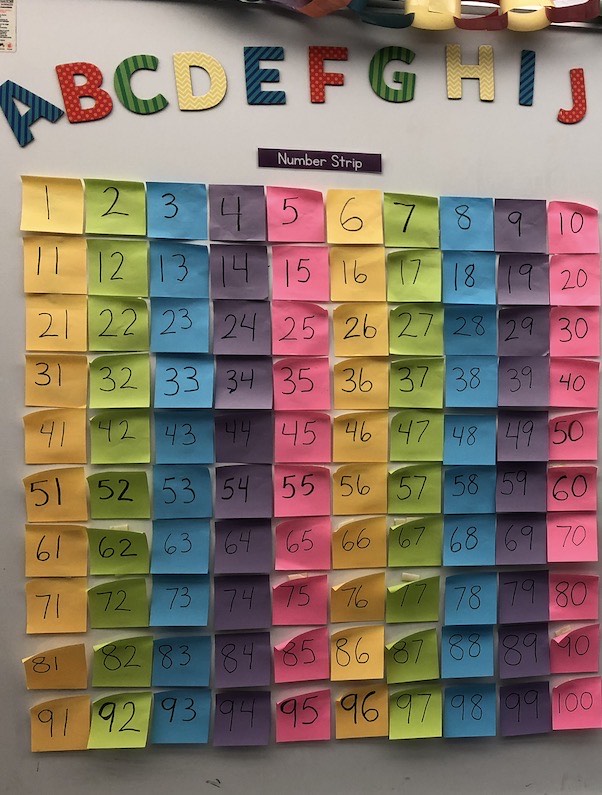
As the years passed by, I added more to my morning number sense routine. One year, a year where it was particularly challenging to keep the attention of my students, I decided to chant and dance around a little. The chanting of “how many days of school have we had, how many days of school have we had?” caught their attention and has become a beloved part of the morning routine. (video coming soon)
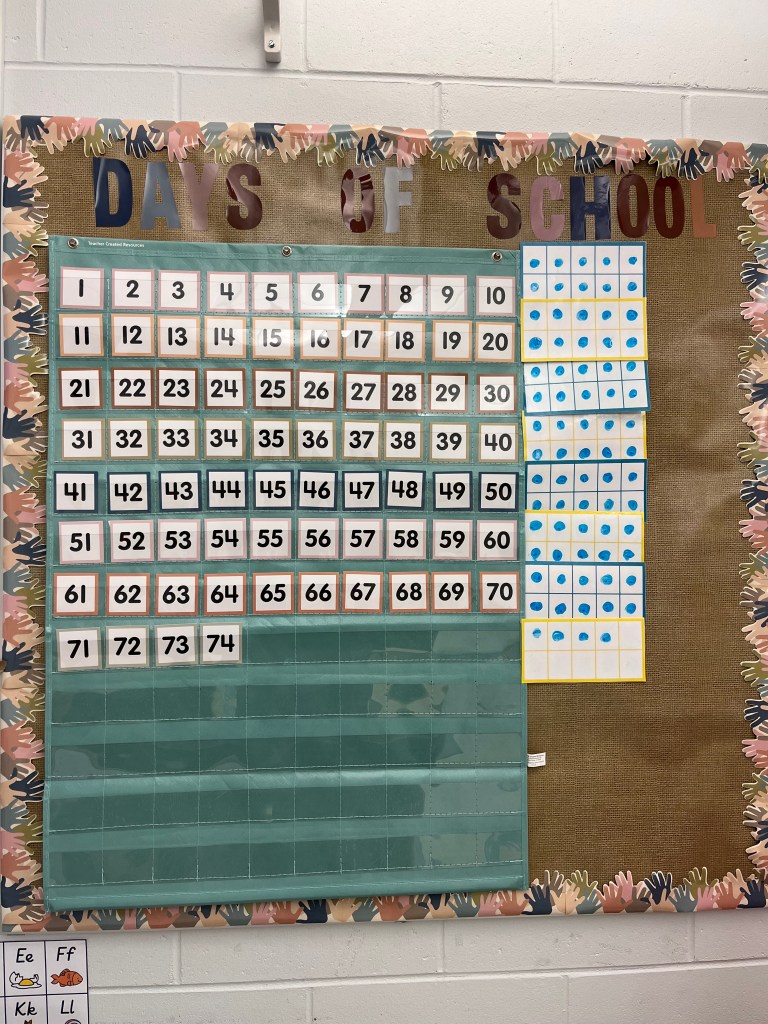
After chanting, I point to each number and the students count. We start the year by counting in ones. I have the students count in ones until we reach 20. The teen numbers are tricky, so the more practice counting them, the better. When we get to 20, we begin counting in tens across each row. We discuss how it would take forever to count in ones and that skip counting by ten is much faster. Also, many of the students begin to see patterns in our base-10 system as we construct the 100-square day by day.
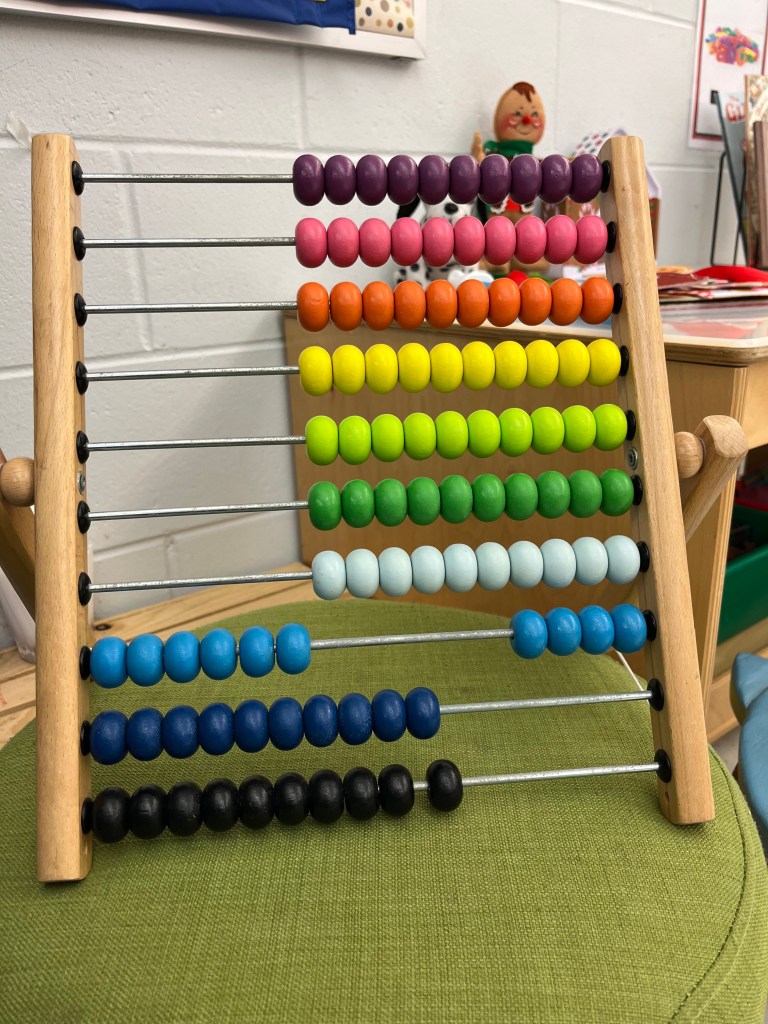
After adding a number to the 100-square, we also represent the days of school with 10-frames by adding another dot. We then represent the days of school on the wooden abacus. Finally, we stand up and represent the number with body movements. Since sets of 10s are much bigger than ones, we put both hands up and pretend to push a whole set forward while we do squats. Then we put our hands on our hips and do teeny tiny toe taps to represent each one. The transition between counting in tens and ones is probably the most difficult math concept in kindergarten. This daily practice, counting and representing numbers to 100 in different ways every day, helps students to recognize and represent numbers to 100 with base-10 blocks later in the year.
 Mrs. Coomber's Kinderland
Leave a comment